
The importance of key person and shareholder insurance

Many successful businesses are dependent on a relatively small number of individuals.
This is particularly true of founder-led and specialist businesses, where leadership, technical knowledge, client relationships or commercial experience may be concentrated among only a few people.
The death, serious illness or incapacity of one of those individuals can therefore have consequences well beyond the personal loss involved. It can affect revenue, client relationships, decision-making and, in some circumstances, the underlying value of the business.
The death of a shareholder can create a different set of issues. Without appropriate arrangements in place, their shares may pass to beneficiaries who have no involvement in the business, while the remaining shareholders may not have the liquidity required to acquire them.
Key person and shareholder protection are designed to address these different risks.
Key person protection
A key person is someone whose contribution is particularly important to the continued operation or financial performance of a business.
This may be a founder, senior executive, technical specialist or individual responsible for significant client relationships.
Their loss could result in:
- reduced revenue or the loss of contracts;
- disruption to client relationships;
- recruitment and replacement costs;
- delays to strategic plans; and
- pressure on the value or financial stability of the business.
Key person insurance does not replace the individual. Its purpose is to provide capital to help the business manage the financial consequences of their loss and allow time for an appropriate response.
Determining the correct level of cover requires careful analysis. Relevant factors may include the profit attributable to the individual, revenue associated with their relationships, the cost and time required to replace them and the likely period of disruption.
For substantial sums assured, insurer capacity and financial underwriting will also need to be considered.
Depending on the arrangement, cover may be available for death, specified critical illness or long-term incapacity.
Shareholder protection
Shareholder protection addresses a different issue: what happens to an individual’s interest in a business when they die.
In the absence of prior planning, shares may pass to the deceased shareholder’s beneficiaries.
Those beneficiaries may have no wish to retain an interest in the company, while the surviving shareholders may want to preserve the existing ownership structure but be unable to fund the purchase of the shares.
Appropriately structured shareholder protection can provide the liquidity required to facilitate that transaction.
The insurance arrangement will usually sit alongside appropriate legal documentation.
One structure that may be used is a cross-option agreement. This can give the surviving shareholders the option to purchase the deceased shareholder’s shares and the beneficiaries the corresponding option to require the surviving shareholders to buy them.
The precise legal and tax treatment needs careful consideration, including the potential interaction with Business Relief.
Regular review matters
Neither key person nor shareholder protection should be treated as a one-off exercise.
Business values change. People join and leave. Responsibilities move between individuals and ownership structures evolve.
Protection arrangements should therefore be reviewed periodically to ensure that the sums assured, insured individuals and legal structures continue to reflect the business as it exists today.
For owner-managed and privately held businesses in particular, protection is an important part of wider succession and continuity planning.
Get in touch
At John Lamb Hill Oldridge, we advise high-net-worth and ultra-high-net-worth clients and their professional advisers on complex business and personal protection arrangements.
If you would like to discuss how we can support you or your clients, please contact us at mail@jlho.co.uk or on 020 7633 2222.
Please note
This article is for general information only and does not constitute advice.
All information is correct at the time of writing and is subject to change.
The Financial Conduct Authority does not regulate estate planning, trusts or tax planning.
Financial protection plans typically have no cash-in value at any time and cover will cease at the end of the term. If premiums stop, cover will lapse.
Cover is subject to terms and conditions and may include exclusions. Definitions of illnesses vary between providers and will be set out in the relevant policy documentation.
Other Insights

Navigating IHT Changes for Non-Doms, APR/BPR, & Pensions
Recent years have introduced new complexities and challenges regarding how individuals protect their estates.

‘A succession plan is only as strong as its liquidity strategy’ by Ken Maxwell published in Eprivateclient
A recent article by Ken Maxwell, Director at John Lamb Hill Oldridge, has been published in EPrivateClient, exploring an often-overlooked aspect of succession planning: liquidity. The article examines why even the most carefully structured succession [...]
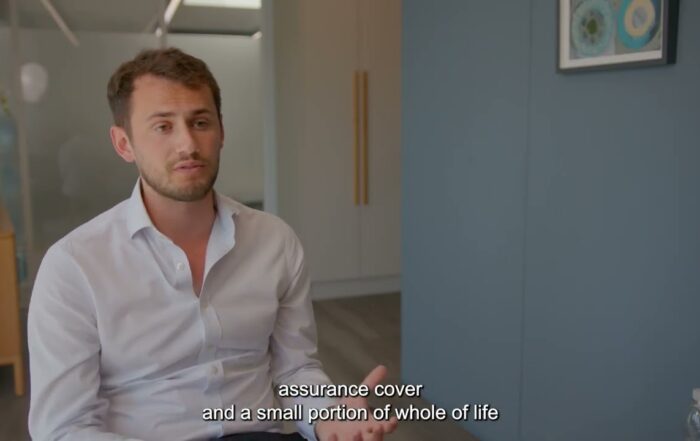
Affordable IHT Protection for Illiquid Estates
In this video, Jacob Fay, Associate at John Lamb Hill Oldridge, explains how his team structured a cost-effective Inheritance Tax (IHT) protection plan for clients with predominantly illiquid assets.