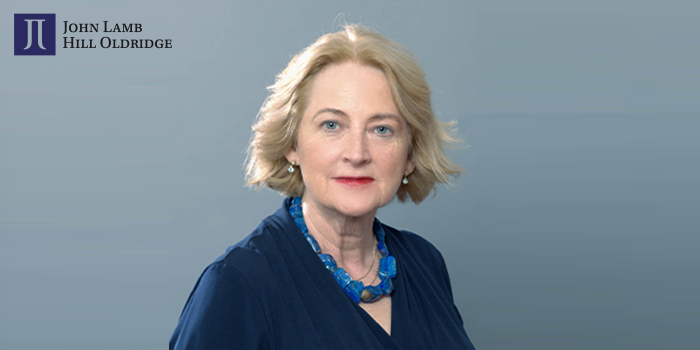
More awards success for John Lamb Hill Oldridge as Paula wins Lifetime Achievement Award
We are excited to announce that our director, Paula Steele, has won a silver Lifetime Achievement Award at the [...]



We are excited to announce that our director, Paula Steele, has won a silver Lifetime Achievement Award at the [...]
Our Director, Ken Maxwell, recently spoke with COVER Magazine about the challenges of writing high net worth life insurance. [...]
We’re thrilled to announce that our Director, Paula Steele, has reached the third and final shortlist for Woman of [...]
A man in his 70s and a woman in her 60s with a property worth £4 million. Their existing lifetime mortgage of £1.6 million had a relatively high interest rate of just above 7%, which meant that the amount owing was increasing rapidly. The couple were concerned about the loss of equity from their property.
A man aged in his 80s with a property worth £750,000 and a mortgage for £150,000 secured against it. The client had minimal income, but because of his care needs, he was spending £22,000 per year on his care (while remaining in the property) and on the costs of running the home. His savings were being rapidly depleted by these ongoing costs, even though his family were providing financial assistance. Another brokerage firm had already said that it could not assist him, and he was increasingly worried that he would be forced to leave his home.
A single woman in her 60s with a property valued at £400,000. The client had £25,000 in credit card and loan debt. It was costing her £600 per month to repay these debts, so this was having an impact on day-to-day living, even though her monthly income was £1,800. She also wanted to carry out some home improvements but had no savings and was unable to obtain further credit due to her impaired credit history.
A recently widowed man in his 80s. His existing lifetime mortgage had an interest rate above 6% and there was no facility to make fee-free repayments due to being an older product, which was far from an ideal arrangement. He was also due to inherit a large cash lump sum and wanted to use some of this to reduce the debt secured against his property
A retired woman in her late 70s, finding that her income was not sufficient to cover her outgoings. Client’s financial difficulties had led to her accumulating debts and experiencing stress and illness. Friends and neighbours had been providing financial support as the situation worsened as she had no longer had any family.
A married couple in their early 70s, who had recently retired after selling their business. Their interest-only mortgage would shortly come to an end. Although they now had large savings and individual pension funds, they did not have sufficient regular income to meet the affordability requirements needed for a standard residential mortgage.
The client was a 42-year-old non-smoker who was resident in the UK and who was the director of a company. The client had bought out his business partner via an equity fund. The company’s board had decided that the individual needed to take out key person insurance to protect the business, as there could be significant consequences if he were to die unexpectedly or be incapacitated by illness.
I’d like to receive news from John Lamb Hill Oldridge via electronic communication means such as email, and I consent to allow John Lamb Hill Oldridge to store and process the personal information submitted. For more details, please read our Privacy Policy.
John Lamb Hill Oldridge
25 Eastcheap,
London,
EC3M 1DE
Email: mail@jlho.co.uk
Tel: +44 (0) 20 7633 2222
John Lamb Hill Oldridge Ltd is an appointed representative of Hill Oldridge Limited which is authorised and regulated by the Financial Conduct Authority. Registered in England and Wales No. 09408666. The Financial Ombudsman Service (FOS) is an agency for arbitrating on unresolved complaints between regulated firms and their clients. Full details of the FOS can be found on its website at www.financial-ombudsman.org.uk